Discover the 7 best UX design agencies for startups and enterprise teams. Our in-depth guide helps you find the right partner for your project in 2026.
Jan 11, 2026
Finding the right UX design partner can make or break your product. A great agency doesn't just deliver beautiful mockups; they become a strategic partner that clarifies your vision, uncovers user needs, and ships experiences that drive measurable outcomes. The goal is higher conversion, better retention, and increased user satisfaction.
But with hundreds of options, how do you choose? This guide cuts through the noise. We've compiled a detailed roundup of the 7 best UX design agencies for 2026, from nimble teams perfect for startups to enterprise-grade partners like Work & Co, Clay, and MetaLab. Our goal is to give you a clear, actionable path to finding the perfect fit for your specific needs, whether you're building an MVP, a marketing site, or complex internal tools.
Each profile breaks down what makes these firms stand out. We analyze their core strengths, ideal project types, and typical engagement models. A top UX design agency understands the importance of how to display customer reviews to build trust and win sales, making social proof a core part of their strategy, and we'll touch on how these teams integrate such critical elements.
Inside, you will find:
In-depth profiles of each agency with their unique specializations.
Representative case studies with direct links to view their work.
A clear breakdown of who each agency is best for, from SaaS companies to early-stage founders.
This list is designed to help you move from research to a confident hiring decision quickly. Let's find your next design partner.
1. Shalev Agency
Shalev Agency carves out a distinct position among the best UX design agencies by operating as a compact, senior-led partner for growing startups and product teams. Their model is built on speed, clarity, and measurable business outcomes, moving beyond purely aesthetic deliverables. They integrate research-backed UX, sharp UI design, and pragmatic development to create websites, web applications, and internal tools that directly impact conversion rates, user engagement, and operational efficiency.
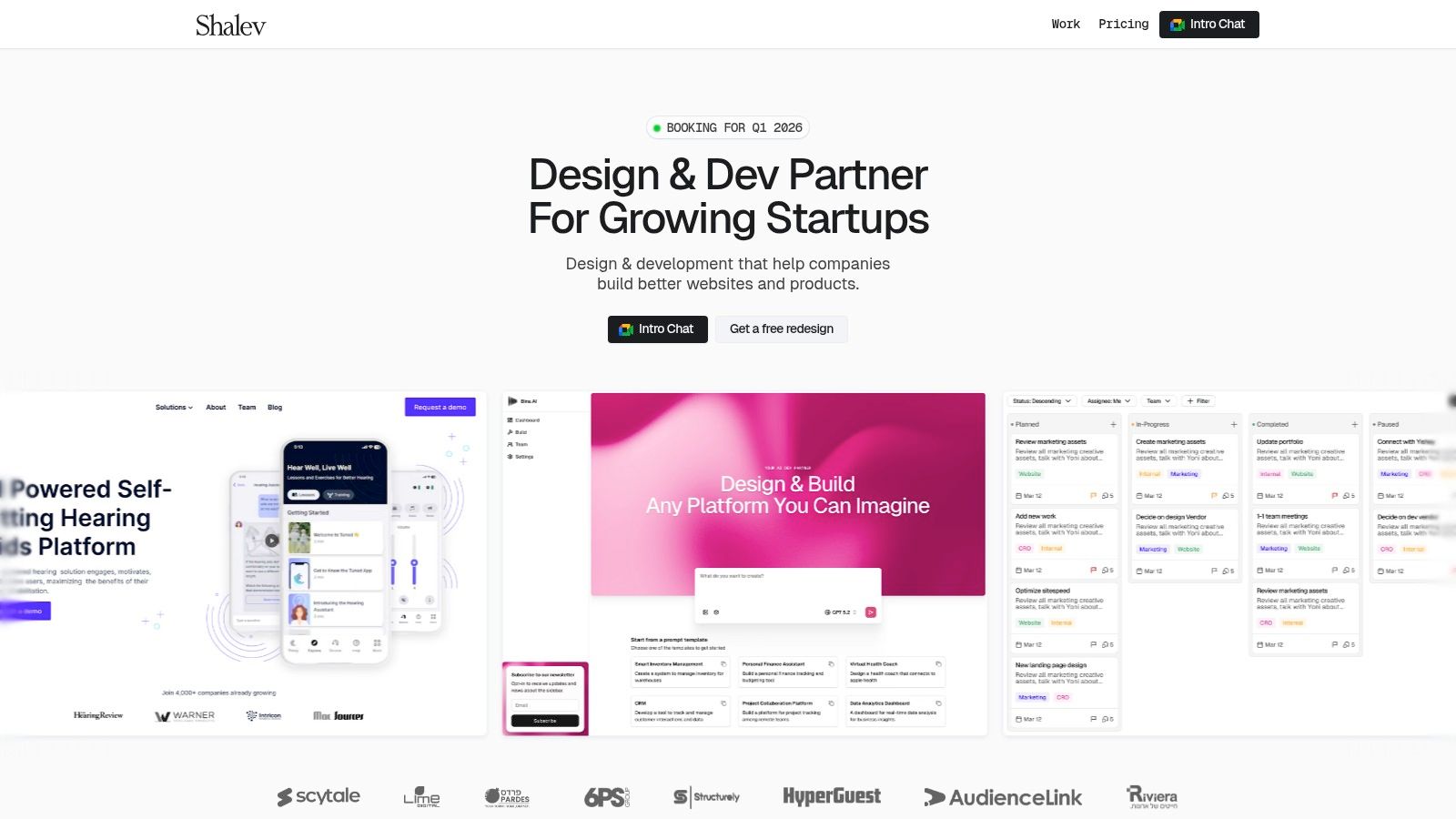
What makes their approach stand out is the fusion of design and development under one roof. This single-team structure removes the friction and miscommunication that often occurs when handing designs off to a separate development team. Clients benefit from a single point of contact and an accountable partner who can take a project from initial concept to a fully functional, shipped product. This is particularly valuable for founders and marketing leaders who need to move quickly without the overhead of managing multiple vendors.
Core Strengths & Service Offerings
Shalev Agency’s value proposition is centered on being an outcome-driven partner. They prioritize tangible results, such as increasing qualified leads or improving user retention, over simply delivering a set of design files. Their work process is transparent and lightweight, using shared Notion boards, async updates, and direct Slack communication to keep clients informed without bogging them down in unnecessary meetings. This focus on clear communication and efficient execution is a recurring theme in client testimonials, with endorsements praising their speed, clarity, and impressive UI craft.
Their service offerings are broad yet interconnected, covering the full product lifecycle:
Website Design & Development: They build conversion-focused marketing sites on platforms like Framer and Webflow or with custom code, ensuring the final product is both beautiful and effective.
Product UX/UI: For SaaS companies and startups, they offer 0-to-1 product design for new MVPs and iterative improvements for existing applications, grounded in user research.
Internal Tools & Automations: They design and build custom internal software and AI-powered workflows to automate repetitive tasks and reduce manual work for operations and revenue teams. Their focus on the broader business context helps them distinguish between user experience and customer experience, a key factor in building products that align with strategic goals. You can explore their perspective on the topic to understand how they connect design choices to business impact.
How to Engage: Pricing & Onboarding
Getting started with Shalev Agency is designed to be straightforward and low-risk. Their fast onboarding process allows projects to begin within a week, a critical advantage for time-sensitive initiatives.
Engagement Model | Starting Price | Typical Use Case |
|---|---|---|
Fixed-Scope Sprints | $5,000+ | Designing and launching a marketing site; building a specific product feature. (2–4 week delivery) |
Monthly Retainers | $6,000+/month | Ongoing product design support; acting as an embedded design partner for an in-house team. |
Free Mini Redesign/Audit | Free (Limited) | Testing their process by getting an annotated redesign of 1–2 key sections plus an implementation plan. |
The free audit is a significant differentiator, allowing potential clients to sample their work and strategic thinking before making a financial commitment. This "show, don't tell" approach builds confidence and ensures a good fit from the start.
Who is Shalev Agency Best For?
This agency is an excellent match for clients who value speed, direct access to senior talent, and a partner who can handle both design and development.
Early-Stage Startups: Founders who need to get an MVP or first version of their product designed and built quickly.
Marketing Teams: Teams that want a conversion-focused website without the complexity of managing separate design and development agencies.
SaaS Product Leaders: Managers who need a research-backed UX/UI partner to improve their product's usability and retention.
Operations & Revenue Teams: Departments looking to build custom internal tools that streamline workflows and increase efficiency.
While their nimble size is a strength for focused projects, it may present capacity limits for massive, multi-year enterprise programs. Vetting should focus on their strong portfolio, client testimonials, and the low-risk trial offer.
2. Work & Co
Work & Co is a digital product agency known for shipping complex, large-scale products with measurable business impact. Founded in the US and now part of Accenture Song, they partner with major brands like Aesop, Virgin America, and IKEA to deliver end-to-end product strategy, UX/UI design, and full-stack engineering. Their model is built around small, senior, cross-functional teams that work directly with clients.
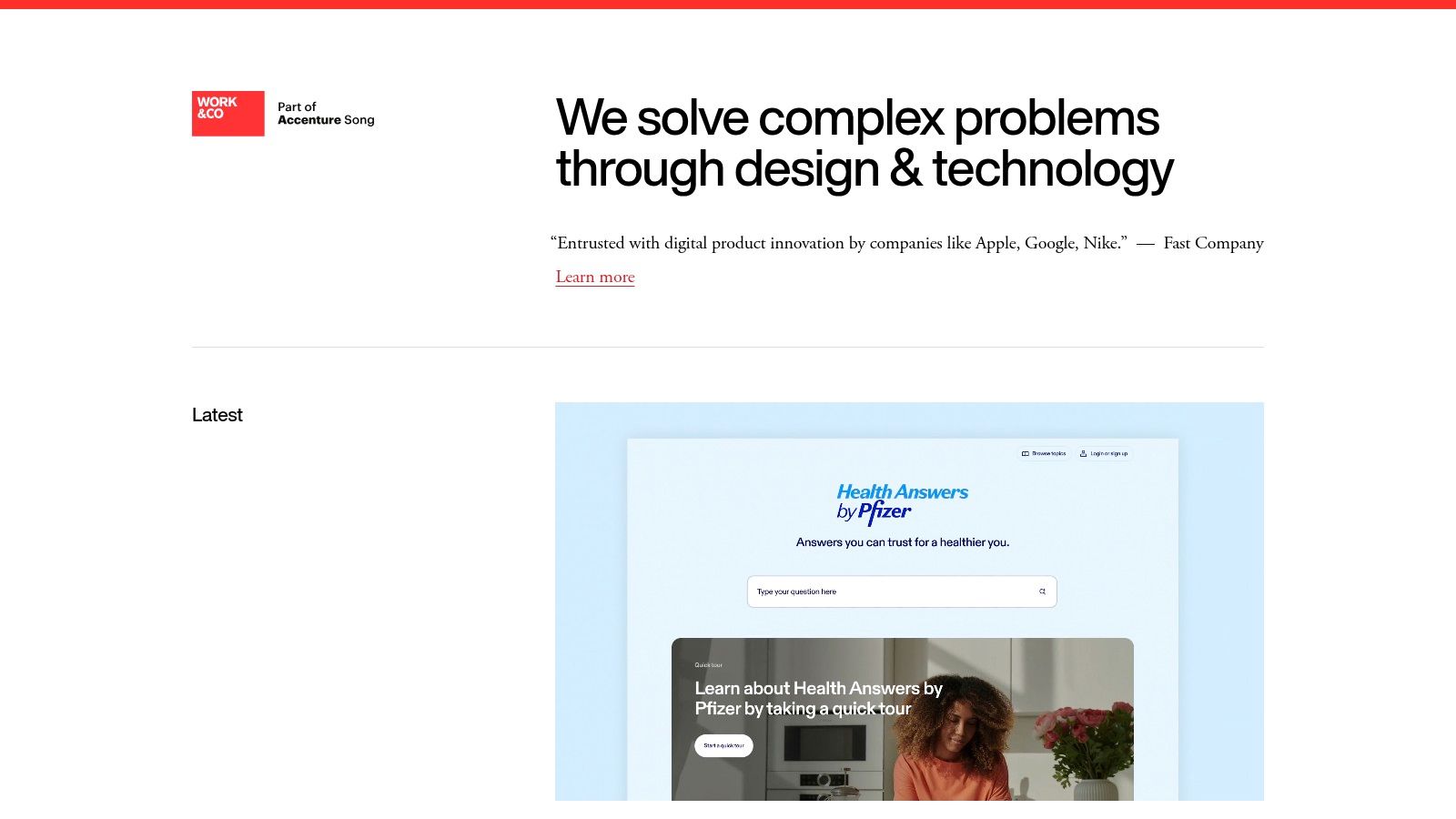
What makes Work & Co a top UX design agency is their relentless focus on results. They don't just create beautiful interfaces; they build products that move the needle on key performance indicators. The agency often publishes the specific outcomes of their projects, such as conversion rate increases or performance gains, which provides clear evidence of their value. This data-backed approach is a significant differentiator.
Core Strengths and Service Model
Work & Co excels at integrating strategy, design, and engineering into a single, efficient workflow. This structure helps reduce the friction and delays that often occur when hand-offs happen between separate teams or companies. Their hands-on, senior-led teams mean clients get direct access to experienced practitioners, which can speed up the entire product lifecycle.
End-to-End Delivery: They manage the full process from initial strategy and user research to UX/UI design, prototyping, creating design systems, and final engineering and QA.
Small, Senior Teams: Clients work with a dedicated, senior-level team, ensuring expertise is embedded in the project from day one.
Measurable Impact: A strong track record of delivering real-world results for enterprise clients, with a portfolio that showcases business transformations.
Future-Focused Expertise: The agency is actively working in emerging areas like Generative AI, agentic workflows, and multimodal UX, making them a good fit for companies looking to build next-generation products.
Best Fit and Engagement
Work & Co is best suited for mid-market and enterprise-level companies with complex product challenges and the budget for a premium, results-driven partnership. They are not typically a fit for very early-stage startups with minimal funding.
Because of their reputation and demand, engagement can sometimes involve longer lead times, especially within large organizations that have complex procurement processes. However, for companies that need to launch a high-stakes digital product or overhaul an existing one at scale, their integrated model provides a clear path to success. Their approach aligns well with a structured methodology, and you can explore the typical phases in our guide to the product design process steps.
Website: https://www.work.co
3. Instrument
Instrument is a technology-led brand and product agency that excels at creating cohesive digital ecosystems. They merge strategy, UX/UI, creative, and engineering to launch comprehensive solutions for global brands like Nike, Google, and Oura. Their work spans brand systems, websites, product user experience, and growth marketing campaigns, all under one roof.
What makes Instrument a standout UX design agency is their ability to balance high-level brand storytelling with detailed product execution. They don't just design a functional app; they ensure the app feels like a natural extension of the brand's voice and mission. This integrated approach is especially valuable for companies looking to create a unified customer experience across marketing websites, mobile apps, and even physical products. Their long-standing partnerships with top tech and lifestyle brands demonstrate a consistent ability to deliver at scale.
Core Strengths and Service Model
Instrument’s main advantage is its cross-disciplinary structure, which allows them to move fluidly between brand identity, product design, and marketing activation. This prevents the disjointed feel that can happen when separate agencies handle different parts of a customer journey. They bring deep experience in commerce, SaaS, media, and wearables, giving them broad context for solving complex user problems.
Full-Stack Digital Capabilities: Offers a complete service suite, from developing brand systems and marketing sites to designing product UX and running growth campaigns.
Integrated Teams: Strategy, UX, creative, and engineering work together from the start, ensuring brand and product decisions are aligned and informed by technical feasibility.
Proven at Scale: A robust client list featuring repeat business from major companies signals their reliability and capacity for large, multi-faceted projects.
Brand and Product Synthesis: Unique strength in connecting brand positioning with the tangible user experience, making them a great choice for companies that need both.
Best Fit and Engagement
Instrument is best suited for well-funded startups and established enterprise companies that need a partner to build or overhaul a significant part of their digital presence. They are a strong choice for projects that require a thoughtful connection between brand strategy and product design. Their model is less aligned with very early-stage teams looking for a quick, sub-six-week MVP.
Given their reputation and the caliber of their client work, Instrument is in high demand, which can sometimes result in longer lead times for new projects. Companies should plan their engagement well in advance. For organizations that need a partner capable of executing a unified brand and product vision across multiple touchpoints, Instrument provides a proven and highly-regarded option.
Website: https://www.instrument.com
4. Clay
Clay is a San Francisco-born UI/UX and branding agency that delivers research-backed product design, conversion-focused websites, and full-stack development. With an impressive client roster including Slack, Meta, Google, and Amazon, they emphasize enterprise UX, modern design systems, and AI-powered experiences, making them a strong contender for companies aiming for market leadership.
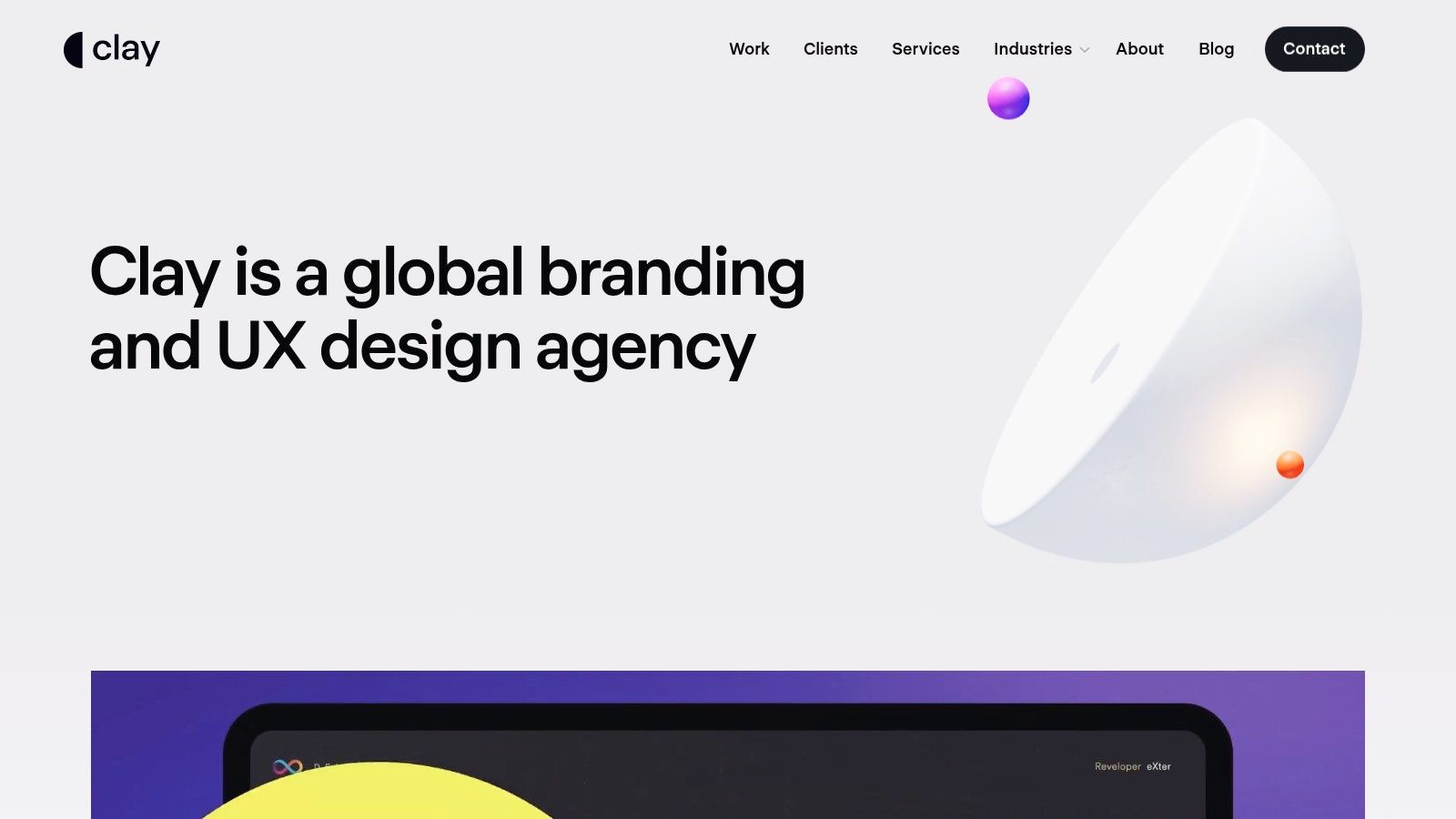
What makes Clay one of the best UX design agencies is its ability to blend high-end branding with performance-driven digital product design. They don't just build functional products; they create polished, cohesive brand experiences that resonate with users and drive business goals. This dual expertise in both marketing sites and complex product UX allows them to serve as a single, unified partner, which is a significant advantage for fast-moving startups and SaaS companies.
Core Strengths and Service Model
Clay’s strength lies in its integrated, cross-disciplinary teams. These teams cover the entire project lifecycle, from initial research and strategy through to UX/UI, branding, content, and engineering. This structure ensures that both brand identity and user experience are considered from the very beginning, leading to more coherent and impactful results.
Integrated Product and Brand Design: They possess a rare ability to ship both world-class marketing websites and sophisticated product UX, reducing vendor handoffs and ensuring brand consistency.
AI-Forward UX Practice: The agency actively works on designing AI-powered features and enterprise software, positioning them as a partner for companies building next-generation applications.
Enterprise UI Modernization: Clay specializes in creating and implementing design systems to modernize enterprise software, making complex tools more intuitive and efficient for users.
Transparent Engagement Models: They are clear about their engagement structures, offering time & materials, fixed-fee, and retainer options to fit different project needs and budgets.
Best Fit and Engagement
Clay is an excellent fit for startups and SaaS companies that need a fast, senior-level team to deliver polished design with measurable conversion impact. Their ability to handle both marketing and product design makes them ideal for businesses looking to streamline their vendor relationships. You can dive deeper into the specific needs of this sector by reading our guide on UX design for SaaS.
Due to their premium positioning and reliance on senior talent, their services may be above the budget for very early-stage or lean startups. As a popular agency, there can also be a lead time before a project can begin. However, for organizations that prioritize speed, quality, and a unified brand experience, Clay offers a compelling and effective partnership.
Website: https://clay.global
5. MetaLab
MetaLab is a product design and development studio known for helping define and scale interfaces for category-defining software. Founded in 2006, they have a long history of creating production-ready designs with engineering support, famously contributing to the early design of Slack. The agency favors fast prototyping and pragmatic UX to quickly bring products from idea to reality.
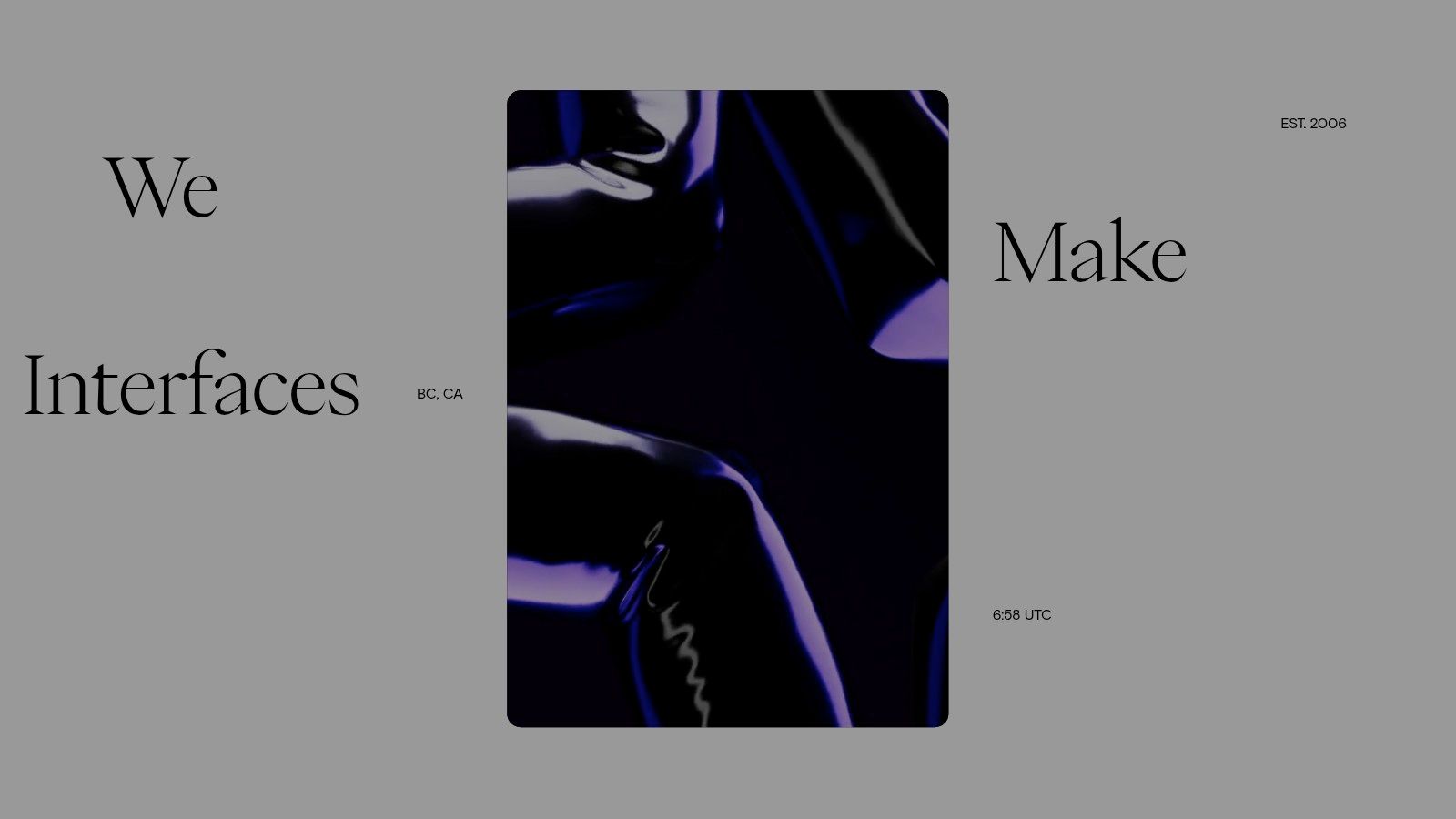
What makes MetaLab one of the best UX design agencies is their proven ability to take a product from zero to one. They don't just design; they partner with clients to ship functional MVPs and build the strategic foundation for long-term growth. Their portfolio is filled with widely used interfaces, demonstrating a clear understanding of what it takes to build products that users adopt and love.
Core Strengths and Service Model
MetaLab excels at the intersection of strategy, design, and development, making them a strong partner for founders and product leaders who need more than just mockups. They specialize in turning a nascent idea into a tangible, market-ready product with a focus on speed and execution. Their experience with applied AI in product workflows also positions them well for building modern applications.
0→1 Product Strategy: Deep expertise in taking concepts from initial idea to a launched MVP, including user research, positioning, and feature prioritization.
Production‑Ready Delivery: Provides not just UX/UI design but also web development and engineering to ensure the final product is built to spec.
Rapid Prototyping: A core part of their process involves quickly building and testing prototypes to validate ideas and gather user feedback early.
Proven Interface Design: A strong history of designing interfaces for successful software, commerce, and consumer tech products that are used by millions.
Best Fit and Engagement
MetaLab is an excellent fit for venture-backed startups and growth-stage SaaS companies that need to move quickly and establish a strong product-market fit. Their embedded team model works well for organizations that want a close, collaborative partnership. They are less suited for large enterprise projects with rigid, waterfall processes or very small projects with limited budgets.
Engaging with MetaLab typically begins with a discovery phase to scope the project and align on goals. Their popularity means there can be a waitlist for new projects, so it's wise to reach out with ample lead time. While they don't publish pricing details publicly, their model is built for clients who are serious about investing in a high-quality, end-to-end product build.
Website: https://www.metalab.com
6. ustwo
ustwo is a global digital product studio that builds meaningful products and services with a strong focus on human-centered design. With a US presence in Brooklyn, they partner with organizations in sectors like health, fintech, and mobility, combining discovery, UX/UI, and engineering. They are recognized for their people-first approach to technology, including AI, and their commitment to creating secure, high-quality digital experiences.
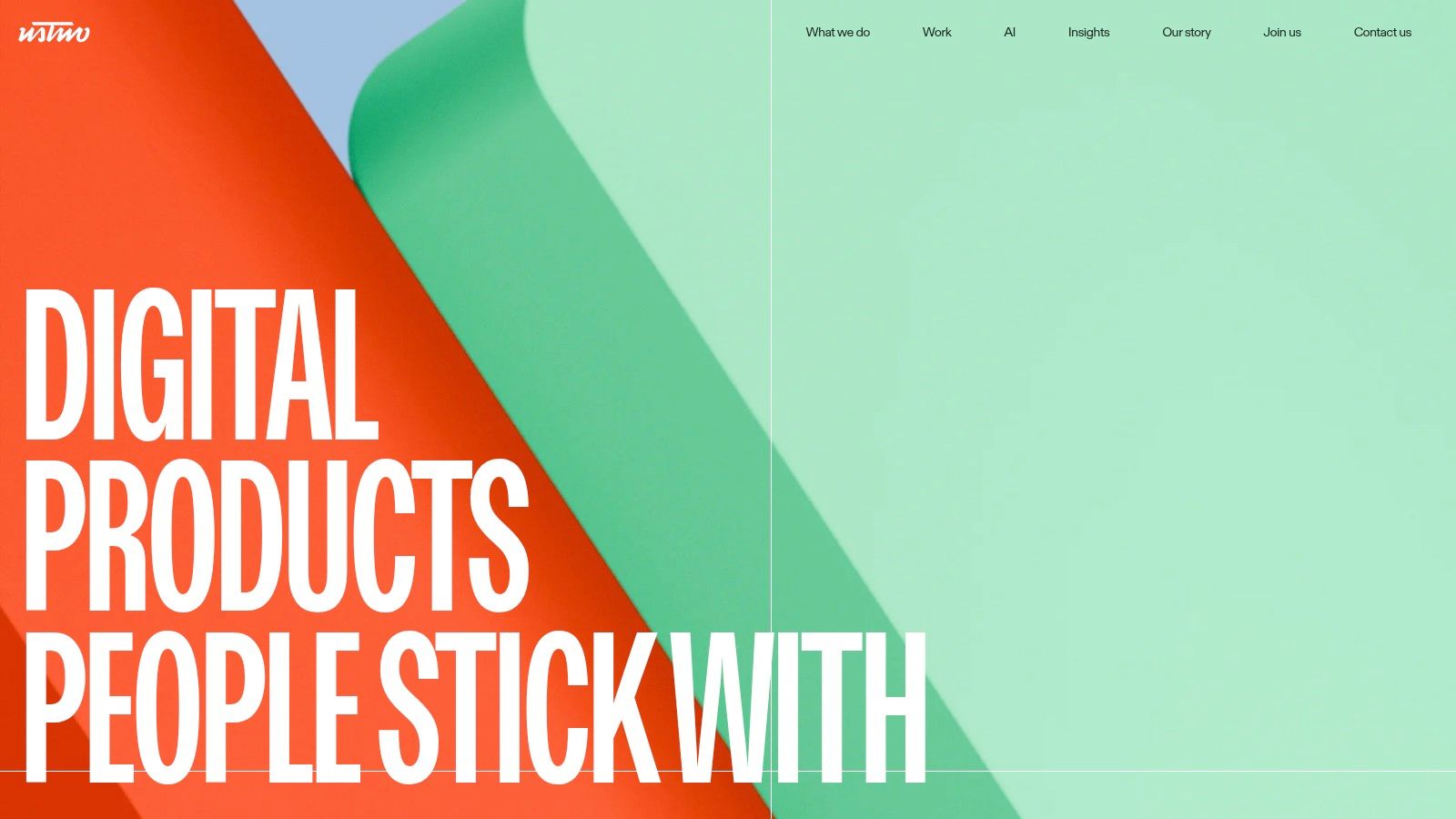
What makes ustwo one of the best UX design agencies is their proven ability to balance creative innovation with disciplined execution. Their strong design culture produces work that is both beautiful and functional, but it's their ISO/IEC 27001:2022 certification that adds a critical layer of trust. This credential demonstrates their capability to handle security-sensitive projects, making them a reliable choice for enterprise clients and regulated industries where data protection is a primary concern.
Core Strengths and Service Model
ustwo thrives on integrating strategy, design, and engineering into cohesive, cross-functional teams that guide a product from initial concept to final launch. This discovery-to-delivery model ensures that user needs and business goals remain aligned throughout the entire process. Their global footprint also allows for a "follow-the-sun" collaboration model, which can accelerate timelines for international projects.
Discovery-to-Delivery Teams: They provide end-to-end product development with integrated teams covering strategy, user research, UX/UI design, and full-stack engineering.
Security and Compliance: Holding an ISO/IEC 27001:2022 certification makes them a strong partner for projects with strict security requirements, simplifying enterprise procurement.
AI-Enabled Experiences: The studio has experience in designing AI-powered interfaces and developing early product roadmaps that incorporate emerging technologies responsibly.
Human-Centered Culture: Their work is grounded in a deep understanding of user behavior, resulting in products that are intuitive and genuinely useful.
Best Fit and Engagement
ustwo is best suited for established companies and enterprise clients that need a partner for complex, multi-stakeholder digital products. Their security posture and process maturity are a great match for regulated industries like healthcare and finance. While they are a premium agency, their focus on measurable outcomes provides clear value for substantial initiatives.
They may not be the ideal fit for very early-stage startups on a shoestring budget or for clients needing a quick, narrow-scope deliverable. The coordination required for their global teams can introduce some process overhead, which is most beneficial for larger, more intricate projects. For organizations ready to invest in a secure, well-crafted digital product, ustwo offers a dependable and expert partnership.
Website: https://www.ustwo.com
7. Fantasy
Fantasy is a veteran product and experience design company that has built a reputation for creating 'intelligent experiences' by blending AI strategy with profound product innovation. They partner with ambitious brands to deliver vision‑to‑launch UX for operationally complex platforms, with notable work for Kohler, Amper (an AI music composition tool), and Royal Caribbean.
What makes Fantasy one of the best UX design agencies is its ability to define and build entirely new product categories from the ground up. They don't just iterate on existing ideas; they are brought in to imagine the future of an industry and build the interface for it. This forward-looking approach, especially their deep AI advisory, allows them to craft experiences that feel years ahead of the competition.
Core Strengths and Service Model
Fantasy's main strength is its strategic approach to zero-to-one product definition. They are skilled at navigating ambiguity to create category-redefining user experiences. Their expertise spans consumer-facing apps, complex B2B platforms, and even operating-system-level interfaces, demonstrating a wide range of capabilities.
AI Strategy and Execution: The agency provides deep advisory and execution for companies looking to build new, AI-enabled product lines.
Complex System Design: They have a proven track record in designing for operationally complex systems in sectors like travel, hospitality, and luxury e-commerce.
Vision-to-Launch UX: Fantasy guides clients from the initial product vision and strategy all the way through to final UX design and launch.
Category-Redefining Innovation: Their portfolio showcases a focus on creating breakthrough products rather than incremental improvements.
Best Fit and Engagement
Fantasy is best suited for established companies and well-funded ventures aiming for significant market disruption or transformation. They are a premium partner for those who need to build a first-of-its-kind product, particularly one involving AI or a complex operational backbone.
Engagements with Fantasy are selective and require significant investment, making them a less common fit for early-stage startups with very small budgets or extremely short project timelines. Because their capacity is limited and their process is thorough, prospective clients should initiate conversations early for proper scoping and alignment. There is no public pricing, so engagement begins with direct contact to discuss project goals and needs.
Website: https://fantasy.co
Top 7 UX Design Agencies Comparison
Agency | Implementation complexity | Resource requirements | Expected outcomes | Ideal use cases | Key advantages |
|---|---|---|---|---|---|
Shalev Agency | Low–Medium — fast sprints (2–4 weeks) for common scopes | Low–Medium budget; small senior team; rapid onboarding (days) | Conversion lift, faster MVPs, automated workflows | Early-stage startups, marketing sites, internal tools, quick 0→1 builds | Senior-led, single team for design+dev; outcome-driven; low-friction trial |
Work & Co | High — end‑to‑end at scale, complex integrations | High budget; enterprise procurement; cross‑functional teams | Measurable product transformations and performance gains | Mid‑market to enterprise products needing scale and metrics | Senior teams with published KPIs; strong GenAI and multimodal expertise |
Instrument | Medium–High — integrated brand + product programs | Medium–High budget; multidisciplinary resourcing | Cohesive brand/product ecosystems and campaign lift | Funded startups and established teams needing positioning + UX | Strong brand + product integration; proven with large clients |
Clay | Medium — enterprise UX, design systems, AI features | Medium–High budget; design systems and engineering capacity | Enterprise modernization, polished conversion-focused UX | SaaS teams, enterprise UX modernization, design system builds | AI-forward UX, single-team delivery across marketing and product |
MetaLab | Low–Medium — rapid prototyping to production | Medium budget; focused on 0→1 and MVP embedding | Production‑ready interfaces and fast MVP launches | Venture-backed startups and growth-stage SaaS | Deep startup track record; pragmatic prototyping and delivery |
ustwo | High — discovery-to-delivery for complex, regulated work | High budget; global teams; security/compliance resources | Human-centered products with enterprise security posture | Regulated industries, multi-stakeholder products, large initiatives | ISO/IEC 27001 certified; strong people-first design culture |
Fantasy | High — ambitious, vision-to-launch platforms | High budget; selective engagements with senior experts | Category‑redefining UX and AI-enabled product lines | New product lines, complex AI-enabled platforms, luxury/consumer | Deep AI advisory and high‑end product visioning |
From Shortlist to Partner: Making Your Final Decision
You now have a detailed breakdown of some of the best UX design agencies in the industry. From the enterprise-level polish of Work & Co and Instrument to the bold, brand-forward work of Clay and MetaLab, the options are as diverse as the challenges they solve. This guide was built to move you beyond simple directories and give you a genuine feel for what it’s like to work with these top-tier teams.
The real task begins now: translating this knowledge into a confident hiring decision. The "best" agency on paper isn't always the best fit for your specific context. Your goal is to find a partner that aligns with your company culture, project scope, budget, and long-term vision.
Distilling Your Needs Before You Engage
Before you send a single email, take a moment for internal alignment. A clear project brief is the single most important tool for getting accurate proposals and finding the right partner. Don't worry about making it perfect; focus on clarity.
Key Questions to Answer Internally:
What is the core business problem? Are you trying to increase user retention, improve conversion rates, reduce support tickets, or launch a new product to validate a market? Be specific.
What is our realistic budget and timeline? Having a range in mind (e.g., "$75k - $125k over 3-4 months") is far more productive than being coy. It allows agencies to scope their proposals appropriately.
Who are the key stakeholders? Identify everyone who needs to be involved in the decision-making process. This prevents delays and ensures everyone’s voice is heard early.
What does success look like? Define clear metrics. Is it a 15% increase in trial sign-ups? A 20% reduction in user-reported errors? Quantifiable goals set the stage for a results-driven partnership.
Running an Effective Selection Process
Once your internal brief is ready, it's time to engage with your top contenders. We recommend shortlisting two to three agencies from this list that seem like the strongest potential fits. This allows you to conduct a focused evaluation without getting overwhelmed.
Your initial calls are about more than just seeing more portfolio examples. Pay close attention to the questions they ask you.
Insight: A great agency will challenge your assumptions and dig deep into your business goals. If their first question is about your budget and their second is about design trends, it's a red flag. They should be obsessed with understanding your problem first.
A Structured Approach to Agency Vetting:
The Chemistry Check: During the first call, assess the human element. Do you enjoy talking to them? Does their communication style feel clear, organized, and collaborative? You'll be working closely with this team, so a strong cultural fit is essential.
The Strategy Review: Ask them to walk you through a relevant case study. Don't just look at the final screens; ask about the research that informed the design, the obstacles they faced, and how they measured the project's impact.
The Process deep-dive: Inquire about their project management process. How do they handle feedback? What tools do they use for communication (e.g., Slack, Asana, Figma)? How often will you meet? A well-defined process is a strong indicator of a professional and reliable team.
The Trial Run: For agencies that offer it, a small, paid discovery phase or product audit can be an excellent way to test the working relationship. This low-risk engagement gives you a direct sample of their work, thinking, and collaboration style before you commit to a full project.
Choosing from the best UX design agencies is a significant investment that shapes the future of your product and your business. By following a structured, thoughtful process, you move from simply hiring a vendor to building a true partnership. This partner will not only deliver exceptional design but will also act as a strategic extension of your team, pushing you toward your most important goals with clarity and purpose.
Ready to skip the endless search and partner with a team that gets it? At Shalev Agency, we specialize in research-backed UX/UI for SaaS, startups, and internal tools, turning complex problems into simple, effective software. Book a free strategy call to see how our proven process can bring clarity and results to your project.